Data case study · August–October 2024
iPhone 16 Social Media Analysis
An end-to-end study of how more than 230,000 YouTube comments changed before, during, and after Apple's iPhone 16 announcement.
- comments analysed
- 230k+
- videos plus the live event
- 1,000
- held-out spam-classifier F1
- 0.91
- post-event network edges
- 989k
The question
What changes when anticipation becomes a product announcement?
I treated the September 9 event as a natural breakpoint. The goal was not simply to count positive and negative comments, but to connect language, spam behavior, anomalous accounts, and community structure across three observation windows.
The pipeline
From API collection to model evaluation and network analysis.
01
Data mining
YouTube video, comment, live-chat, and public account data before, during, and after the event.
02
Spam classification
Feature engineering, semi-supervised labeling, nested validation, model selection, and tuning.
03
Emotion and sentiment
A pretrained transformer converted comment-level emotions into topic-level sentiment.
04
Anomaly detection
Isolation Forest surfaced unusual account behavior from engagement and publishing features.
05
Network science
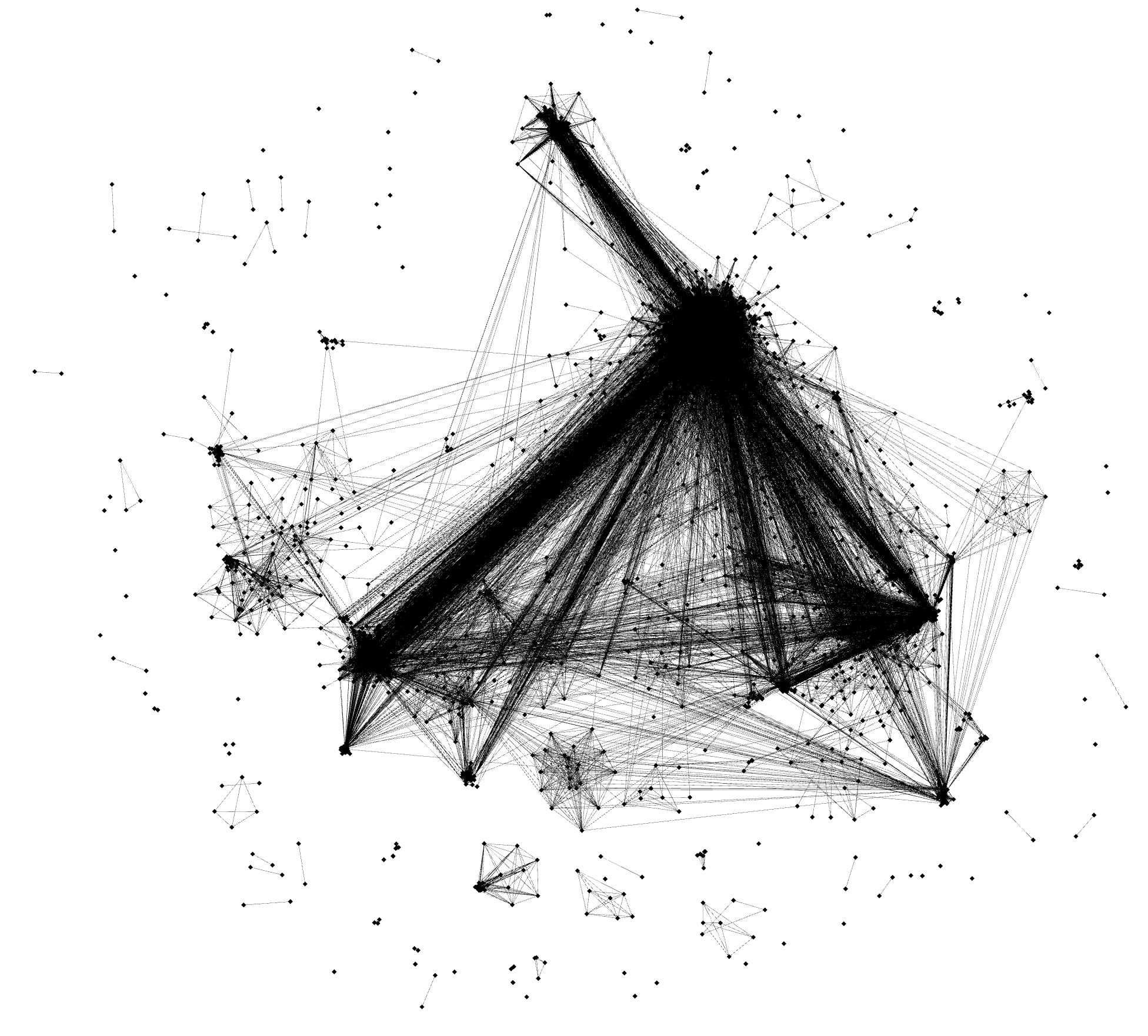
Co-commenting graphs exposed central users, assortativity, clustering, and Louvain communities.
Selected results
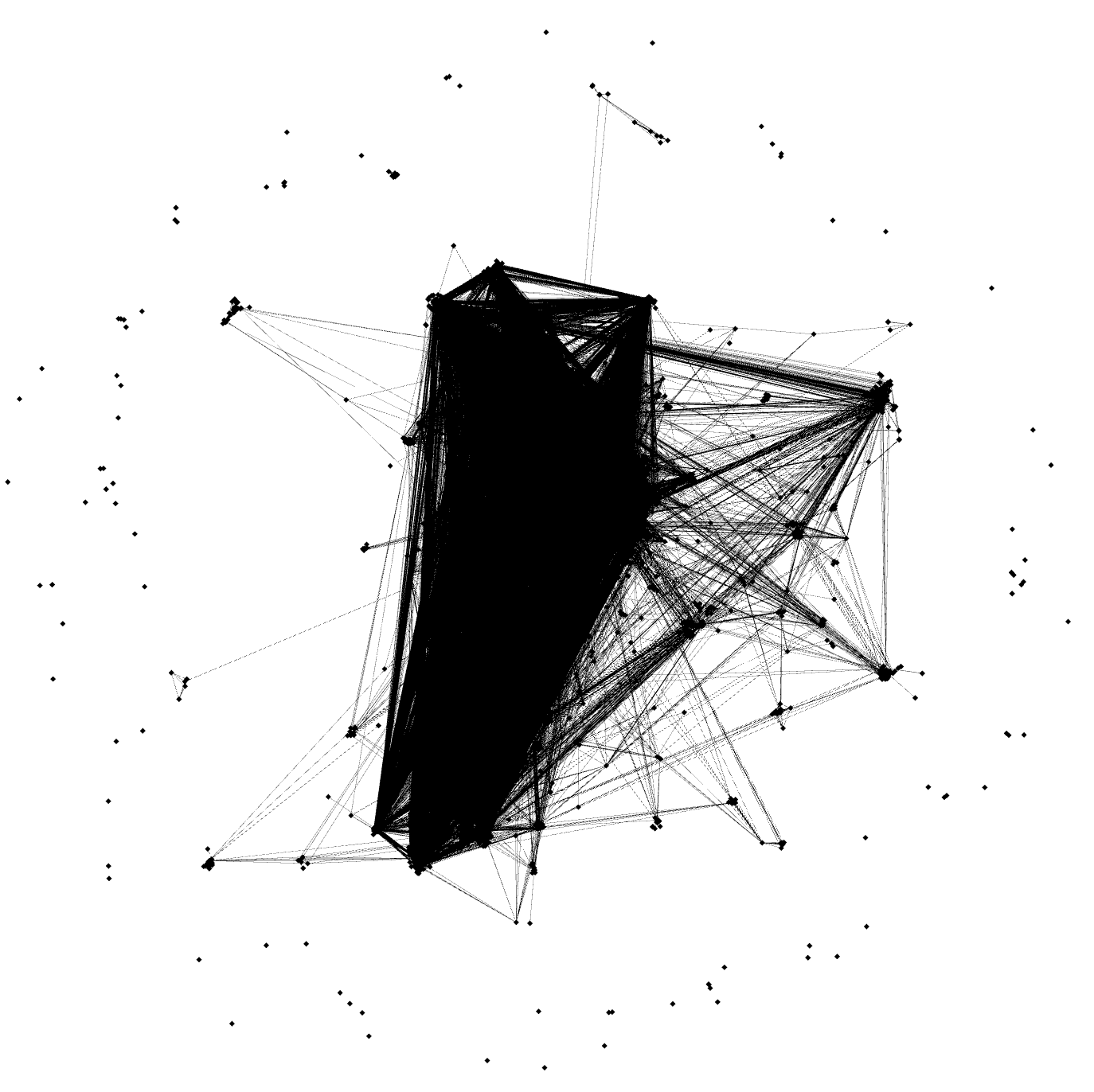
The sampled network grew and local clustering increased.
| Metric | Before | After |
|---|---|---|
| Spam shareThe live event itself was lower at 1.57%. | 4.41% | 4.70% |
| Network nodesMore unique commenters entered the shared-video network. | 4,190 | 7,789 |
| Network edgesCo-commenting relationships expanded dramatically. | 55,778 | 989,232 |
| TransitivityLocal clusters became substantially denser. | 0.324 | 0.690 |
Interpretation & limits
What the evidence supports.
Estimated spam share is similar before and after the event (4.41% and 4.70%). The live event has a lower share (1.57%), but only 1,907 comments—a much smaller sample than the 96,929 before and 131,381 after.
An edge connects users commenting on the same videos, not necessarily users interacting with each other. Sample size and video popularity affect the graph. These findings describe the YouTube sample; they do not establish causality or represent public opinion.
The approximately 0.91 held-out F1 concerns the spam classifier, not sentiment accuracy or the entire pipeline. Notebooks retain their original outputs; reproducing the historical analysis requires the corresponding datasets, which are not included in the public repository.
What the work demonstrates
The value is in connecting methods, not just running models.
The project moves from API collection to supervised learning, transformer-based NLP, unsupervised detection, and graph analysis. I also documented uncertainty: platform sampling, the smaller live dataset, model bias, and the difference between an observed pattern and a causal claim.
The public repository contains the cleaned notebooks, documented setup, selected visual outputs, and the full 52-slide presentation. Credentials and raw mined user data are excluded.
Contact
Let’s talk about a role, a collaboration, or an idea worth building.
If you are considering my profile, would like to collaborate, or have an operational problem to solve, write to me. We can start from the context even if every answer is not clear yet.
Or email me directly diego.webwork@gmail.com
Verona and Northern Italy. Available for employment and freelance projects. Open to relocation.